
Forums

Guidance, support and wisdom to benefit and maximize the life and longevity of animals.
 ×
×
×
×
×
×
×
×
with a password reset link.
Be sure to check your SPAM folder if it's not in your inbox
Can't find it?
Need Help? Contact Us
×
Guidance, support and wisdom to benefit and maximize the life and longevity of animals.

VetVine Client Care

In recent years, we’ve been witnessing a paradigm shift. In a quest to combat or reverse aging, stave off illness, and prolong both health and lifespan, the marketplace has become inundated with information about what we can or should be doing to support those efforts. We’ve even seen the emergence of elective whole body scans for humans – intended to detect occult disease before signs of illness emerge.
In veterinary medicine, we know that being proactive on behalf of patients can also extend their health span. An annual wellness visit (or more frequently for aging pets) is one proactive measure that can help us detect a problem early on. The history and physical exam findings may prompt us to perform diagnostics but, in seemingly healthy animals, we also have quality care protocols or recommendations that include diagnostics based on life stage of the animal (e.g. bloodwork, urinalysis, etc.). Routine laboratory testing in aging pets is a proactive step in assessing the health status of a patient – before the onset of clinical signs. Early detection of disease allows for earlier intervention and better treatment outcomes.
Unfortunately, proactive measures promoting dental and oral health are often overlooked. And there are several possible reasons why including the fact that most veterinary professionals receive a limited amount of training in dentistry, and that patients require anesthesia for prophylactic dental procedures. In addition, we’re not very good about communicating with pet owners about the importance of prophylaxis. We neglect to inform them about the prevalence of dental disease in pets and its consequences. A lot of what we do winds up being reactive rather than proactive dentistry and, often, we aren’t intervening until dental disease is advanced and obvious. Patients then suffer in silence for a prolonged period of time before they receive the care that they need.
What if we stopped reacting to dental disease and started preventing it before it resulted in pain, bone loss, and ill effects on health? Proactive dental care instituted early in life can promote a longer, healthier life for our pet patients. And, it isn’t about scheduling a dental at age three, four, or five. It’s about starting even earlier – by 18 months of age — when the mouth may look just “fine.” If you're not already practicing with that mindset, how can you go about shifting the paradigm? Making the case for early anesthetic dentistry starts by asking clients (and yourself) a novel set of questions:
These are powerful questions that resonate with pet owners, and we need to have these frank conversations early in a pet’s life. When we position ourselves as patient advocates — partners in planning a long, healthy life for the animal — clients listen. And trust follows.
The statistics alone are compelling and demand everyone’s attention:
And yet, when we see a little bit of tartar and maybe some redness of the gumline – the earliest stage of periodontal disease (stage one periodontal disease) – we often discount that and take a “watch, wait and see” approach because it “doesn’t look that bad.”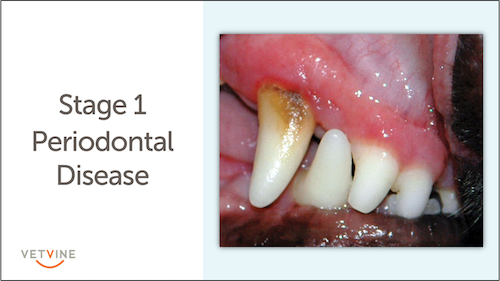
But this is where everything begins. In spite of a little bit of tartar, the gingiva is showing signs of disease (it's edematous and reddened), and there most certainly is some degree of subgingival plaque. This stage is completely reversible if we intervene early. As it progresses (and it will), we will start to see bone loss and, at that point, there’s no turning back. Bone loss is irreversible.
Early anesthetic dentistry allows us to:
Every anesthetic dental should also include intraoral radiographs — every case, every time. Not only do they uncover disease that we can’t see, they also become one of the most effective communication tools with clients. Seeing is believing. Proactive dentistry is better for our patients and clients. This approach prevents pain (rather than reacting to it), reduces the likelihood of disease progression and costlier care (extractions) later in life and, in setting a plan for a lifetime of care, we establish clearer goals and foster stronger relationships with our clients.
When you can explain that early dentistry is about prevention, comfort, and quality of life — not just economics — owners understand. Over time, the impact is undeniable: pets have healthier mouths, they live happier, potentially longer lives, and we have clients who are engaged and bonded to our practice. Dr. Barden Greenfield – a board certified veterinary dentist – advocates for all veterinarians to start thinking like a dentist. In his webinar on this topic, he delves further into how to do just that – how to move beyond reactive dentistry, transform your practice, and align with clients in the lifelong care of patients. 👉 Watch the full webinar to learn about early anesthetic dentistry.